ServicesRoof Treatments
Roof Treatments in Rensselaer
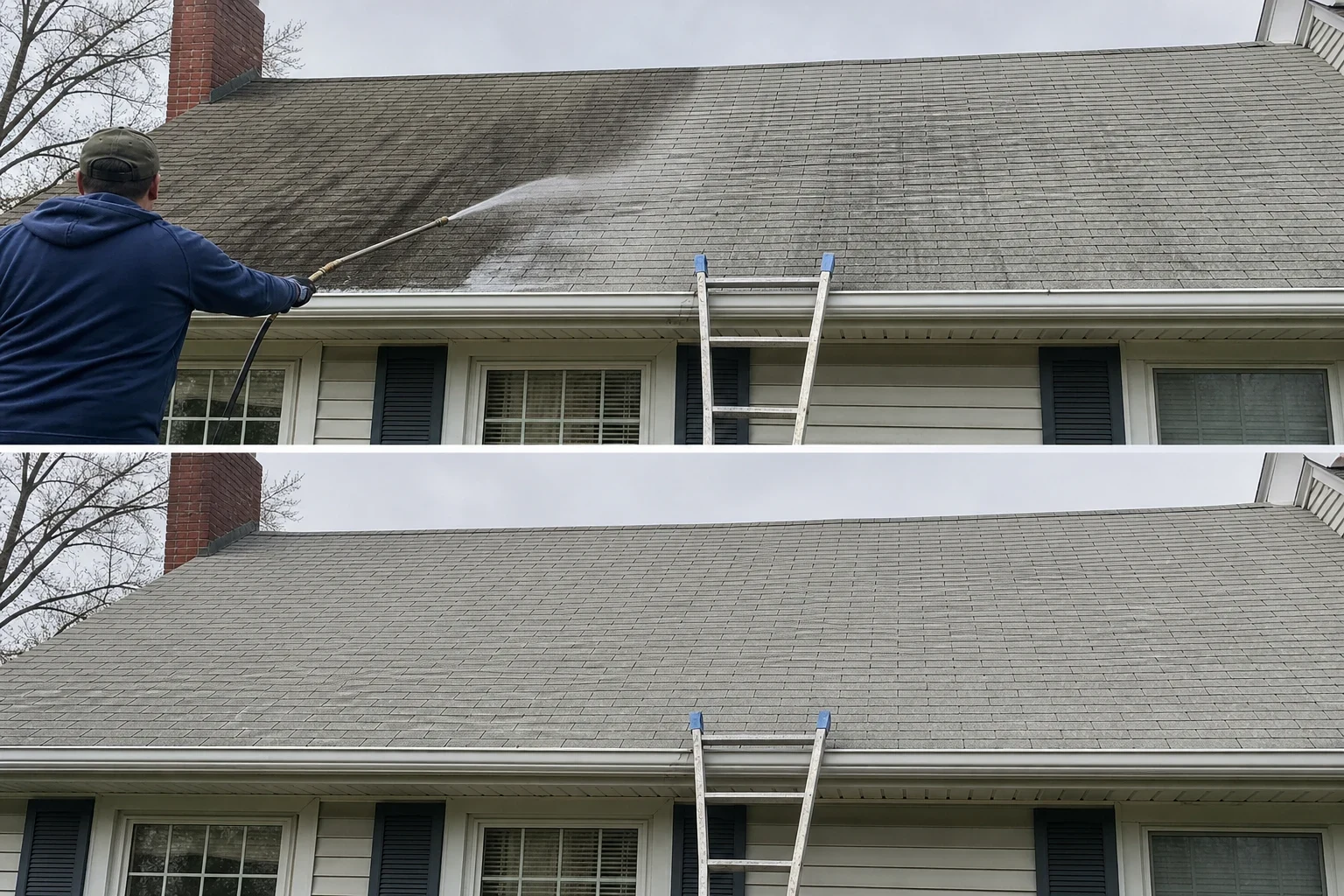
Black streaks, green moss and crusty lichen are three different kinds of growth, and each needs a different treatment. We identify what is on your roof first, then apply the right mix at low pressure so the growth dies back without stripping shingle granules.
What a Roof Treatment Does and When It Makes Sense
A roof treatment is a low-pressure application that kills the growth living on your shingles and lets weather carry it off over the following weeks. Nothing is blasted or scraped. That matters because the ceramic granules on an asphalt shingle shield the asphalt from UV, and once they are knocked loose, that section of roof ages faster.
The black streaks most people notice are usually Gloeocapsa magma, a cyanobacteria that feeds on the limestone filler in many shingles. Moss is a plant that roots under the shingle tabs and holds water. Lichen is a fungus and algae partnership that bonds tightly to the surface. We look closely, sometimes with a sample, before choosing a product and strength, because the wrong mix either does nothing or costs you more than it should.
If your roof has missing shingles, soft decking or active leaks, a treatment is not the fix, and we will tell you so plainly before any work is scheduled.
What Our Roof Treatment Includes
- Growth identification
- We inspect each slope and note what is growing where. Algae, moss and lichen often share a roof, with moss on the shaded side and streaks running down from the ridge.
- A mix matched to the growth
- Algae responds quickly to a diluted sodium hypochlorite solution with a surfactant that helps it cling. Moss and lichen need a slower-acting product that keeps working after we leave.
- Low-pressure application
- We apply from the ridge down at roughly garden-hose pressure. No high-pressure spray touches the shingles, so the granule layer stays where it belongs.
- Plant and property protection
- We pre-wet shrubs and beds below the drip line, cover delicate plantings, and rinse them again afterward. Runoff through the gutters and downspouts is directed away from landscaping where possible.
- Photos and a written scope
- You get photos of what we found and a written estimate that lists each slope, the product and any areas we recommend leaving alone.
Signs Your Roof Needs a Treatment
Dark streaks below the ridge
Vertical black or brown stripes are algae colonies. They spread each humid summer and hold heat on the roof surface.
Green moss in the shingle seams
Moss collects in the keyways between tabs and wicks water sideways under the shingle. Through a winter of freeze-thaw cycles, that trapped water expands and can lift tab edges.
Gray-green crusty spots
Round, flat patches that will not brush off are lichen. Left alone they slowly etch the granule surface.
A slope that stays damp
If one side of the roof stays wet hours after rain, usually under trees or facing north, growth will settle there first.
Granules collecting at downspouts
Some granule loss is normal with age, but heavy amounts near moss patches suggest the roots are working the shingle loose.
How a Treatment Day Runs
- 1
Inspection and diagnosis
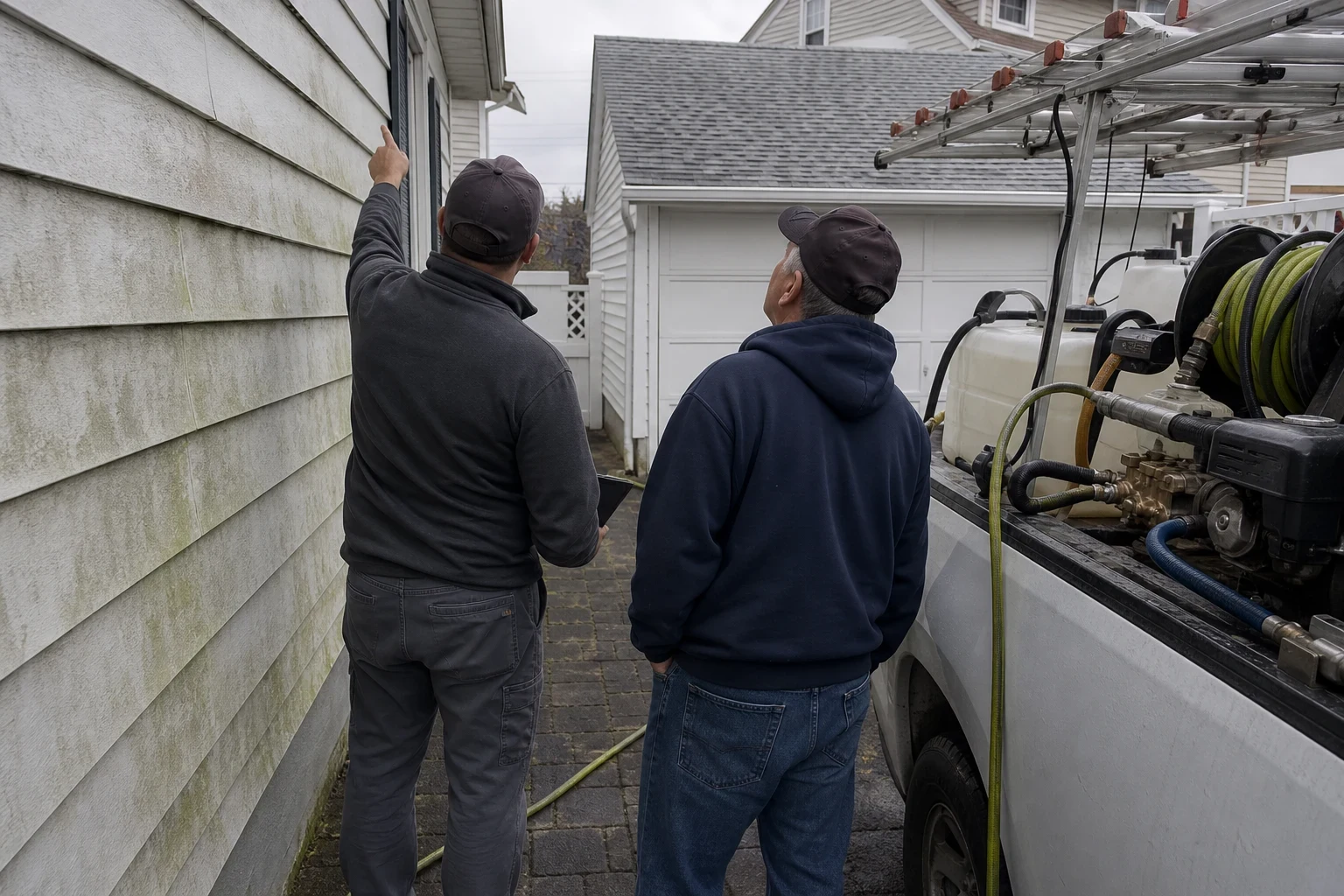
We walk the property, check every slope from the ground and the ladder, and confirm the growth type. Then we explain the plan and what results to expect.
- 2
Prep around the house
We soak plants, cover anything fragile, close nearby windows and move outdoor furniture clear of the drip line.
- 3
Application
The treatment goes on from the top down at low pressure, slope by slope, with heavier attention to moss and lichen patches.
- 4
Rinse and walk-through
We rinse plantings and hard surfaces below, collect our covers and show you the treated areas before we pack up.
- 5
Weathering period
Algae streaks often lighten within days. Moss browns and loosens over a few weeks, and dead lichen releases with rain over several months rather than being scraped off.
What Sets the Price of a Roof Treatment
Every roof is priced after we see it, since two same-size houses can call for very different time and product. You get a written estimate broken out slope by slope, so it is clear where each dollar goes.
- Size and steepness
- A bigger roof uses more product. Steeper slopes call for added safety setup and take longer to work.
- What is growing and how thick
- Light algae streaks are fastest to treat. Heavy moss mats and settled-in lichen need a stronger, longer-working product and more careful application.
- Type of roof
- Asphalt shingles, cedar shakes and metal each need their own products and dilutions so the surface is not stained or harmed.
- Getting around the house
- Narrow side yards, thick plantings under the eaves or a separate garage roof mean more prep and protection.
Roof Treatment Questions
Something not covered here? (518) 535-7833
Will a roof treatment damage my shingles?
Not when it is done at low pressure with the correct dilution. Shingle damage usually comes from high-pressure spray, which knocks loose the granules that protect the asphalt from sunlight. We never aim high pressure at a roof.
How soon will my roof look better?
It depends on what is growing. Algae streaks usually fade within days, while moss takes a few weeks to brown and loosen. Lichen is the slowest and can take several months of rain to fully release.
Is the treatment safe for my plants and lawn?
We pre-wet and rinse everything below the drip line and cover sensitive plantings, which keeps the solution diluted where it lands. If you have a vegetable bed or koi pond near the house, mention it on the call so we can plan around it.
How long does a treatment last?
On a sunny, open roof, results often hold for a few years. Shaded slopes under overhanging branches tend to regrow sooner, and trimming those limbs back helps the treatment last longer.
Do I need to be home during the work?
No. We need access to the yard and an outdoor water spigot. We will review the findings and photos with you before or after, whichever suits your schedule.
Find Out What Is Growing on Your Roof
Tell us what you are seeing and we will come take a close look, identify the growth and give you a written plan. The quote costs nothing.