ServicesWalkway & Paver Cleaning
Walkway and Paver Cleaning in Rensselaer
Gray film on the front walk, black streaks on the steps, orange spots near the downspout. Each one has a different cause and needs a different treatment. We identify what the stain is before we clean, so the surface comes back clean without etching, striping or quick regrowth.
Cleaning That Starts With What the Stain Actually Is
Hard exterior surfaces collect more than dirt. Concrete is porous, so algae, mold spores, tannins from leaves and iron from fertilizer or well water soak into the top layer. Pavers trap organic growth in their joints. Stone steps can bloom white with efflorescence when moisture pulls salts up from below. Blasting all of that with the same high-pressure wand removes some of it and scars the rest.
Our hard-surface work treats each stain by cause. Organic growth gets a cleaner that kills it at the root, rinsed at a pressure the material can take. Rust and mineral deposits get the right chemistry for that stain. If a stain will not come out fully, we tell you before we start instead of after.
What Our Walkway and Paver Cleaning Covers
Stain identification walk-through
We look at each discolored area, test a small spot when needed and sort stains into organic, metal, mineral or petroleum. That decides the cleaner, the dwell time and the rinse pressure.
Concrete walks and steps
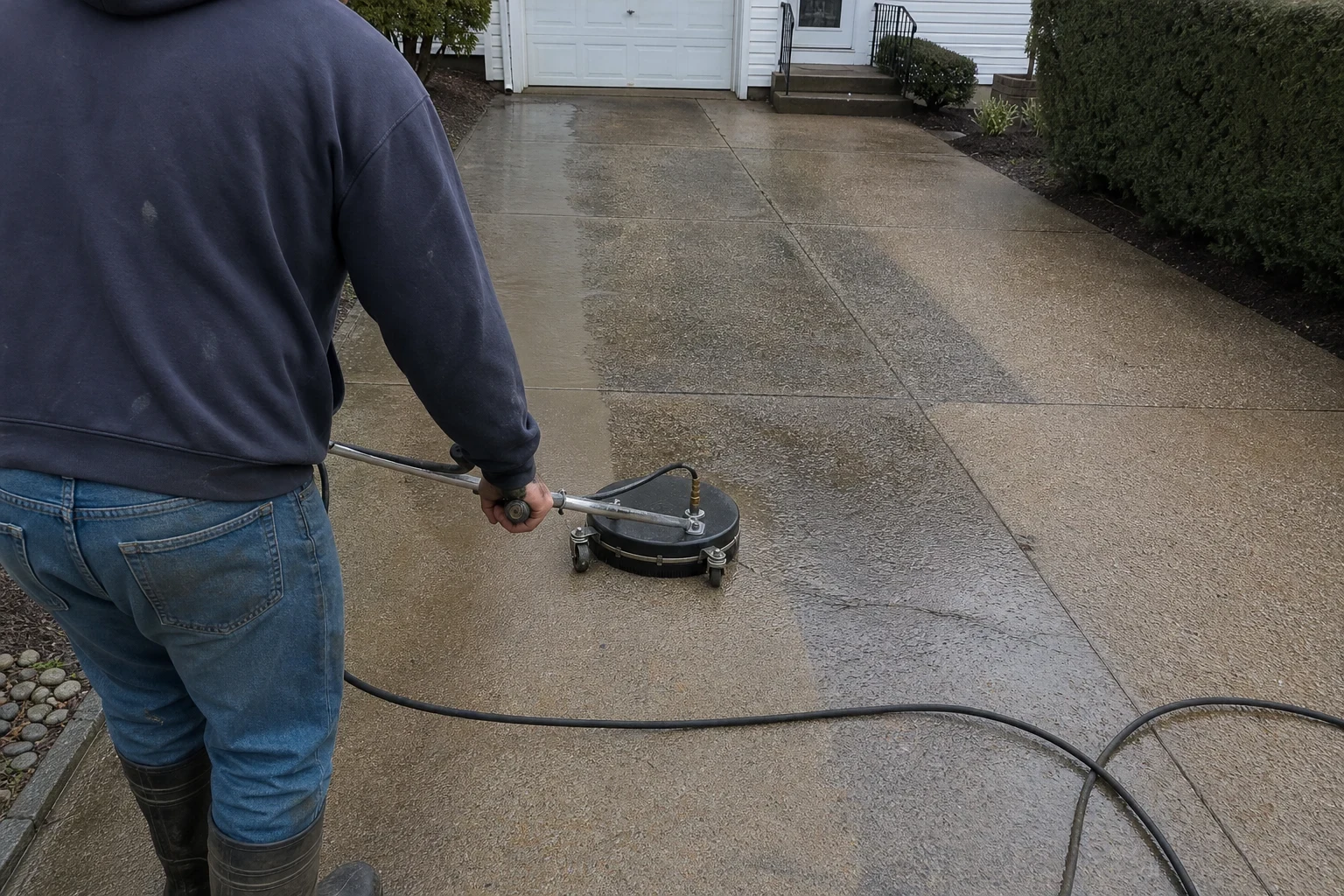
Broom-finished concrete holds algae in its texture. We pre-treat, let the cleaner work and use a rotary flat-surface tool for even results, so you do not see wand stripes when the concrete dries.
Pavers and joint care
Weeds and moss in paver joints come out with the growth, and we rinse at a level that keeps loss of joint sand to a minimum. We point out joints that need resanding afterward.
Retaining walls and stone edging
Block walls and natural stone stain from soil runoff and shade. These materials vary in hardness, so we adjust pressure and chemistry to the specific stone.
Plant and fixture protection
We wet down and cover beds before applying cleaner and rinse them after. Landscape lights, outlets and door thresholds near the work area are shielded from direct spray.
Signs Your Hard Surfaces Need Cleaning
- Slippery green or black film
- Algae and mildew on shaded walks and steps turn slick when wet. That film is living growth, and it comes back fast if it is only rinsed off.
- Orange or brown spots
- These are usually iron stains from fertilizer granules, irrigation water or metal furniture feet. Pressure alone will not lift them.
- White powder or crust
- Efflorescence shows up on concrete, brick and block when water moves salts to the surface. Cleaning helps, but we will also point to the moisture source behind it.
- Dark rings and drip lines
- Spots under trees, planters or eaves often come from tannins or runoff. Knowing the source tells you whether it will return next season.
- Moss in paver joints
- Moss holds water against the pavers and pushes the joint sand out. Removing it early helps keep the pavers from shifting.
How a Walkway Cleaning Visit Runs
- 1
Look and test
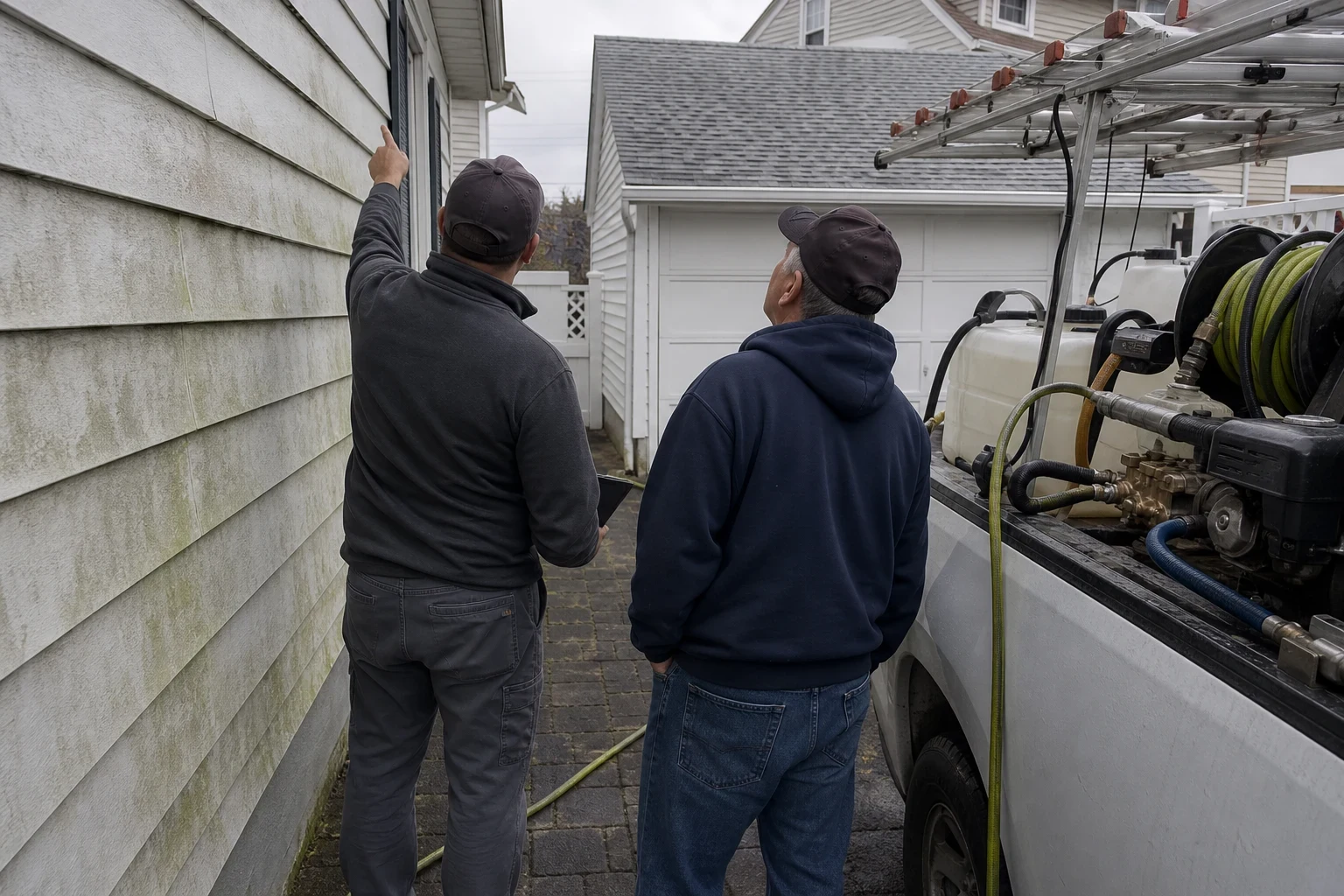
We walk the areas with you, identify each stain type and test any spot we are unsure about. You hear what will clean up fully and what may only lighten.
- 2
Protect the area
Beds get wet down and covered, fixtures and thresholds are shielded and anything movable is set aside.
- 3
Treat by stain type
Organic growth gets a cleaner with enough dwell time to kill it. Metal and mineral stains get their own treatment in a second pass.
- 4
Clean and rinse
A rotary flat-surface tool gives even coverage on open areas, with detail work on steps and edges. Everything is rinsed toward the lawn or drains, away from your foundation.
- 5
Final check
We walk the job with you once it starts drying, because some stains only show their true state dry. Joints that need sand or areas that need sealing get noted.
What Moves the Price
Your free quote by phone is based on the square footage and on what is actually staining it. A lightly mildewed walk is a quicker job than one with iron spots and oil drips. We explain each line so you know what you are paying for.
- Area and layout
- Square footage matters, and so do steps, borders and tight corners that take detail work rather than the rotary tool.
- Type of stain
- Organic growth is one treatment. Rust, oil and efflorescence each add a separate step and product.
- Surface material
- Soft stone and older, worn concrete need lower pressure and more time than newer, harder concrete.
- Water and access
- An outdoor spigot near the work area keeps setup simple. Long hose runs or gated areas add time.
Walkway and Paver Questions
- Will high pressure damage my concrete?
- It can. Concentrated pressure from a narrow tip etches the cream layer of concrete and leaves permanent lines. We rely on cleaner and dwell time to do most of the work and use a rotary tool at a pressure matched to the surface.
- Why did my walkway turn green again a few weeks after I rinsed it?
- Rinsing removes the visible layer but leaves the roots of the algae in the pores. Killing the growth with the right cleaner is what slows the return, especially on shaded, north-facing walks.
- Can you get rust stains out?
- Most fertilizer and irrigation rust lifts well with a dedicated rust treatment. Deep or old stains may only lighten, and we test a spot first so you know which before the full job.
- Is the cleaner safe for my plants and pets?
- We pre-wet and cover plants, keep the cleaner on the hard surface and rinse thoroughly. Keep pets inside during the work and until the surfaces are rinsed and drying.
- When is the best time of year for this?
- Late spring through early fall works best, when temperatures stay above freezing so the surface dries properly. Cleaning before winter also removes growth that makes steps slick in cold, wet weather.
Find Out What Is Staining Your Walks
Tell us which surfaces are bothering you and what the stains look like. We will explain the likely cause and what it takes to clean it.